Record number of entries from across Brazil as competition announces 2025 winners
The Brazil Selection by Concours Mondial de Bruxelles is the most extensive and diverse wine competition in Brazil, receiving samples from 18 different states, which creates a unique panel reflecting national production and revealing its remarkable qualitative evolution.
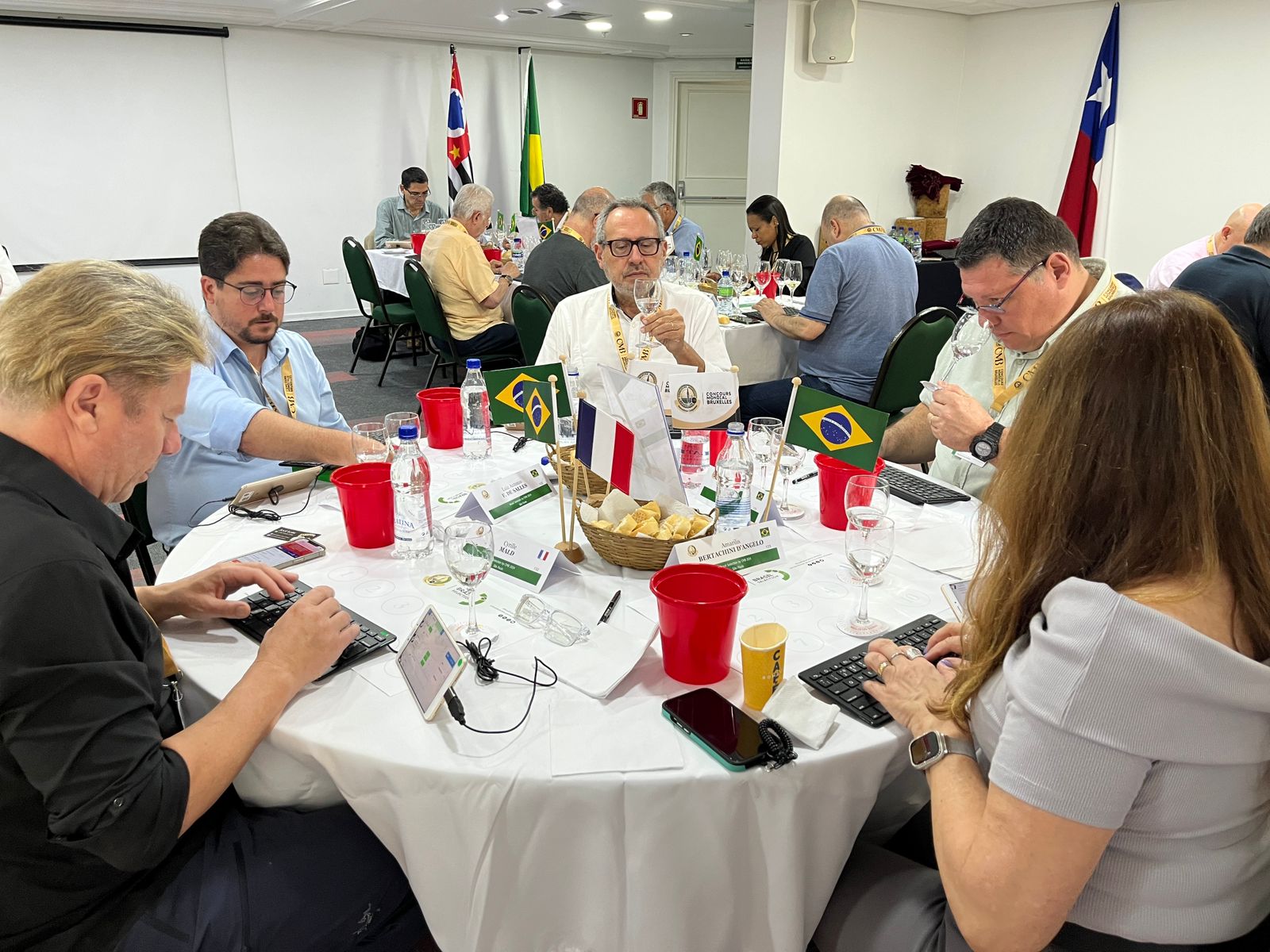
The tastings were conducted by an international jury, with renowned tasters from Canada, the United States, Peru, and Belgium, as well as Brazilian oenologists, sommeliers, and master blenders, and took place at Spa do Vinho, Brazil’s leading wine, gastronomy and wellness hotel, in Vale dos Vinhedos, Bento Gonçalves, RS, from October 20 to 22.
The event evaluates and rewards exclusively Brazilian beverages under the criteria and organization of the Concours Mondial de Bruxelles (CMB), one of the most respected wine and spirits competitions in the world. The goal is to enhance the value of Brazilian products both in the domestic market and in export markets, for which a medal obtained in a competition of CMB’s standing represents a definitive guarantee of quality and prestige.
For Zoraida Lobato, organizer of Brazil Selection alongside Baudouin Havaux, president of the Concours Mondial de Bruxelles, a medal in the only international-level competition held in Brazil has credibility in all markets worldwide and is a formal certificate of quality and food safety.
“It is an important guarantee of quality not only for Brazilian consumers, but also for any producer aiming to reach export markets, since CMB is widely recognized worldwide as a symbol of seriousness, technical rigour and credibility,” says Zoraida.
The competition accepts only products registered with MAPA, the Ministry of Agriculture and Livestock Production, and requires each sample to present a technical report from laboratory analysis, certifying the purity and healthiness of every beverage evaluated.
Brazil Selection by CMB 2025 received 486 samples from producers from all Brazilian wine- and spirit-producing regions. The wines came from Rio Grande do Sul, Paraná, Santa Catarina, São Paulo, Rio de Janeiro, Minas Gerais, Pernambuco, Bahia, the Federal District, Tocantins and Goiás. The spirits arrived from Maranhão, Pará, Pernambuco, Paraíba, Bahia, Espírito Santo, São Paulo, Minas Gerais, Rio de Janeiro, Goiás, the Federal District, Paraná, Santa Catarina, Mato Grosso, Mato Grosso do Sul, Sergipe, Alagoas, Rio Grande do Norte and Rio Grande do Sul. No other evaluation of Brazilian beverages offers such a diverse geographic representation.
The tastings follow the same criteria, rituals and methods as those of what is one of the largest, if not the largest, wine competitions in the world: all samples are tasted blind, in conditions of absolute concentration, and the scores and mandatory comments of all judges are consolidated in real time by an advanced, proprietary Artificial Intelligence system.
The AI delivers, at the end, an aroma wheel compiling the descriptors identified by the judges for each product entered, including those that did not achieve a medal score. Each label entered also receives an AI-generated summary of the tasters’ comments about that beverage.
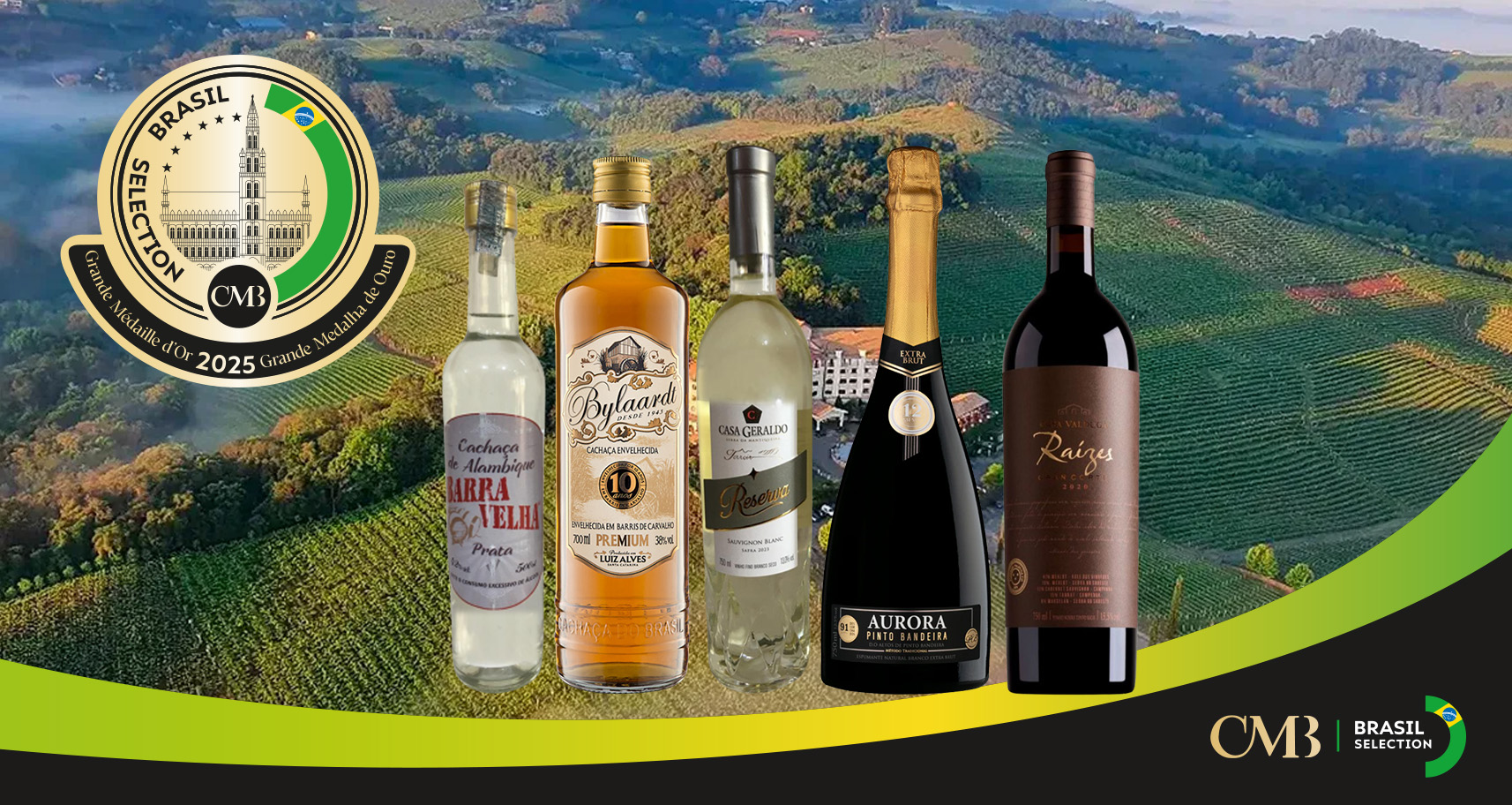
Following criteria adopted internationally by CMB, only 33% of the products entered receive medals, with Grand Gold Medals (between 3% and 5% of the samples entered) and Gold and Silver medals awarded according to the score obtained. The winners also receive diplomas identifying the winning product, its vintage and the medal awarded.
Limiting awards to only the top 30% of samples guarantees the value of each medal, which truly identifies a product that stands above the average.